Why the theme The Vikings makes a good book
An adventure that suits the child
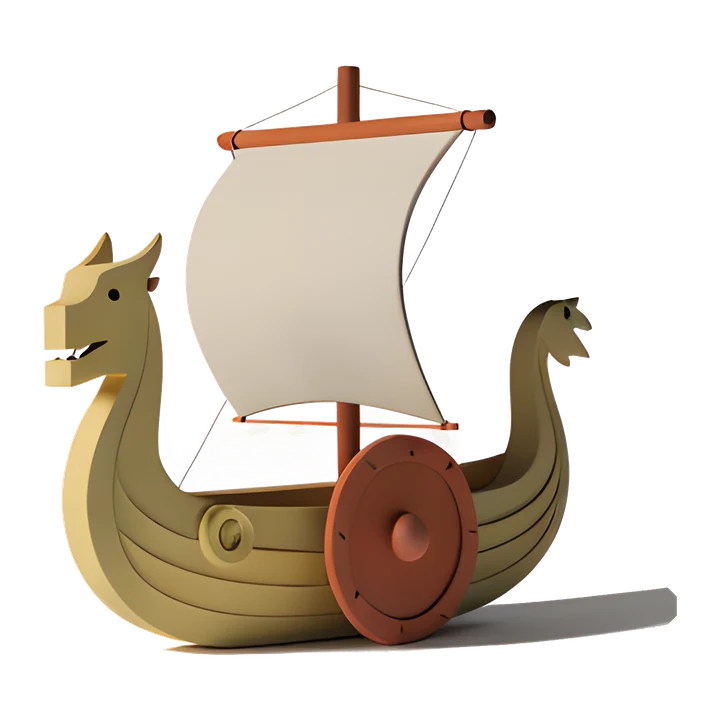
The Vikings are part of the history of Britain and Ireland as well as Scandinavia, which makes them all the more exciting. They sailed across seas, built ships that still impress today, carved runes in stone and told stories of gods and giants by the fire. A book about the Vikings lets your child set off on a voyage in a longship, see how people lived on the farm and perhaps ride out a storm. There are myths to put right, too: most Vikings were farmers, and they had no horns on their helmets. The truth is every bit as interesting as the myths.
On board and on the farm
In a Viking book your child can sail with the ship on a trading voyage, help on the farm when the harvest must be brought in before winter, or decipher a runestone that tells of a lost treasure. Perhaps a storm forces the crew ashore on an unknown island, or it's your child's job to keep the fire alive in the longhouse while the grown-ups are away. Not everything in the story happened, but the ships, the longhouses and the runestones were real.
A Viking name and a place in the crew
Let your child have a Viking name, or keep their own. If you've spotted a carved stone on a walk, visited a museum with Viking finds, or your child has a wooden ship in the play corner, write it in. A child who loves building can help put the ship together, and an animal-loving child can guard the farm's goats. The whole family can be the crew – and nobody needs horns on their helmet.
The youngest get waves, sails and a dragon's head to point at. Pre-schoolers enjoy a simple voyage across the sea and a feast when the ship comes home. School-age children can have a storm, a riddle in runes and a choice that must be made, and ten-year-olds a longer story about leaving home to see the world. The story can also be about those who stayed behind on the farm.
Runes and days of the week
Vikings from Norway and Denmark sailed west to Britain and Ireland, and many settled there: York was once the Viking town of Jorvik, and Dublin began as a Viking settlement. Their gods live on in the days of the week, too: Wednesday is named after Woden, or Odin, and Thursday after Thor. Try writing your child's name in runes on a flat stone with a marker pen. The ships could be both sailed and rowed, and they sat so shallow in the water that they could travel far up rivers. Vikings from Sweden more often headed east, across the Baltic and along the rivers of what is today Russia and Ukraine.
Your child is the hero
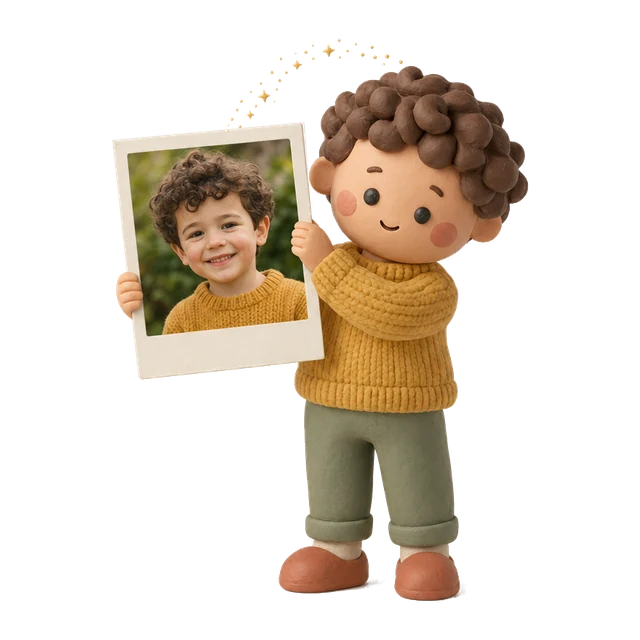
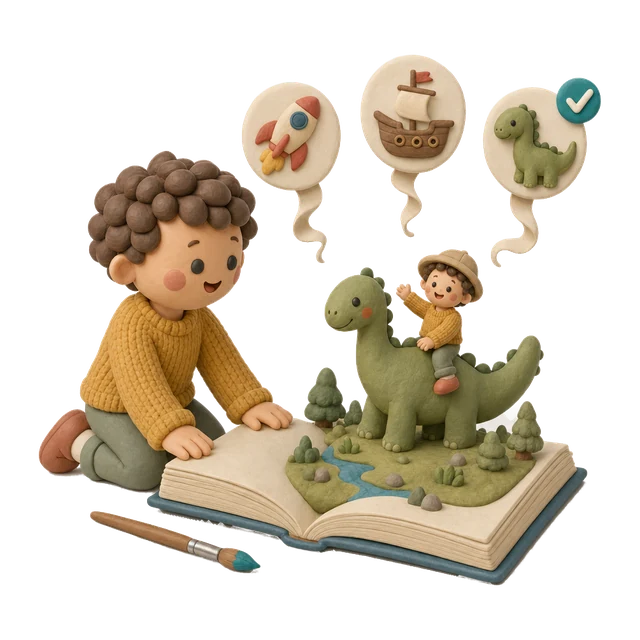
You fill in the child's name, age and what they like, and upload a photo. The story about the Vikings is written for your very own child, and the thirteen pictures and the cover are drawn from the photo in the style you choose. Brothers and sisters, parents, grandparents or the pet can come along, up to five characters. If you would like to include something that has happened lately, a trip or a lost tooth, just write it and it is woven in.
From eBook to hardcover book
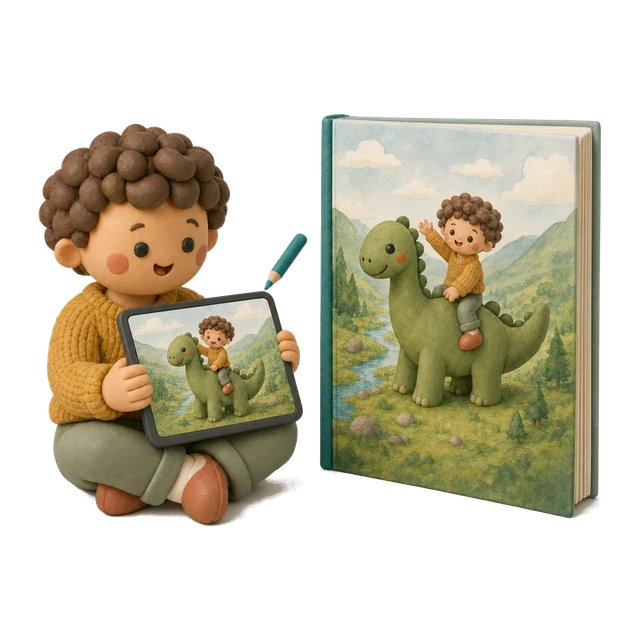
The eBook is ready a few minutes after payment. Read it, change the text and ask for new pictures until you are happy. Then order it as an A4 hardcover book, printed and sent to your door, or straight to the child as a gift. Do add the audiobook or the coloring pages. Start creating the book or read more about the prices. Would you like to see a finished book before you decide? Browse our example books.
How the story could begin
The sail flaps and cracks, and then it fills with wind so that the whole ship leans over. You hold on to the side. Salt water splashes your face, and someone behind you laughs. It's your Aunt Sigrid, standing at the steering oar with her plait full of seawater. “Now we're flying,” she shouts. “Three more days, if the wind holds.” You've left the farm and the bay behind you. In the hold there's wool, iron and furs to be traded for silver and glass beads. But on the third night the sky turns black. The waves rise as high as houses, and in a flash of lightning you see something nobody else sees: an island that none of the old sailors has ever spoken of. On the shore a fire is burning, and beside the fire someone is waving.
 Christmas
 Birthday
 Unicorns
 Dinosaurs
 Pirates
 Space
 Princes and princesses
 Fire department
 Sports
 Mermaids
 Superheroes
 Knights and dragons
 Construction vehicles
 Starting school
 A trip to the farm
 Jungle
 Fairies
 Treasure hunt
 Underwater
 A new baby
 Brushing teeth
 Confidence
 Bedtime story
 The enchanted forest
 Witches and spells
 Giants
 Gnomes
 Wizard school
 Camping
 Time travel
 Haunted house
 Police
 Racing
 Airplanes
 Secret mission
 The zoo
 Dressing up
 Building a tree house
 The amusement park
 A train journey
 A visit to the doctor
 The dentist
 The library
 The beach
 The forest
 Baking
 Music
 Dance
 Ancient Egypt
 The Stone Age
 The Vikings
 In the future
 The Middle Ages
 Candy land
 At the North Pole
 The savannah
 Easter
 Halloween
 Lucia
 Midsummer
 New Year
 Name day
 Eid
 Hanukkah
 Becoming a big brother or sister
 Father's Day
 Mother's Day
 Grandparents
 A new pet
 Moving house
 Sleepovers
 A wedding
 Vacation
 Learning to ride a bike
 Giving up the pacifier
 Potty training
 Tidying up
 Eating well
 Learning to tell the time
 Learning to count
 The alphabet
 Seasons and weather
 Afraid of the dark
 Tantrums
 Feeling homesick
 Being teased
 Jealousy
 Feeling proud
 Handling big feelings
 Funny story
 Olivia
 Muhammad