Why the theme Unicorns makes a good book
An adventure that suits the child
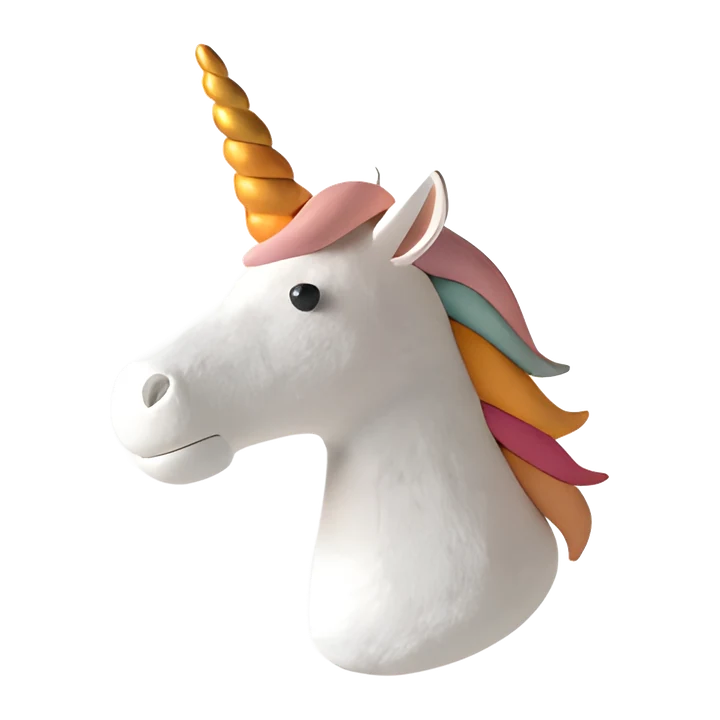
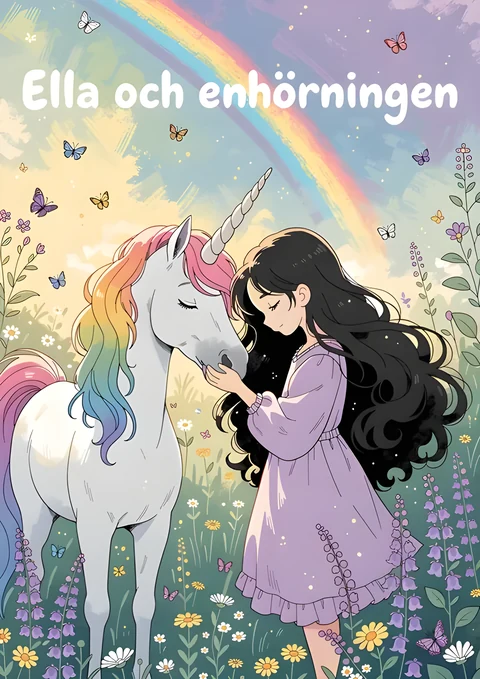
The unicorn is the rarest of animals, the one almost nobody has ever seen. It is beautiful but shy, and that is what makes a unicorn book so exciting for a child: its trust has to be earned. Your child has to approach slowly, speak softly and show they mean no harm. After that come rides across meadows and up through the clouds. Unicorns appeal to children who love horses, colours and glitter, but also to those who like the idea of an animal that only appears to someone with patience.
Where a unicorn can carry you
A book about unicorns can lead your child to the valley where all the colours come from, to a unicorn foal lost in the mist or to a meadow that has stopped flowering. Perhaps the rainbow has lost one of its colours, as in the idea The Unicorn's Rainbow. Your child may get to fly, but also learn how to brush a mane and find the grass unicorns like best. The story could be about protecting a herd from someone who wants to capture it, or about finding the way home through a forest where everything sparkles and nothing is quite what it seems.
You choose the colour of the mane
Ask your child what colour the unicorn's mane should be, what it is called and what it eats. If your child rides, has a favourite horse at the riding school or just likes to stroke the neighbour's pony, that can become part of the story. A brother or sister can have a unicorn of their own, and a parent who is a little nervous of horses can turn out to be the bravest of all by the end. If your child has drawn a unicorn, use the drawing to help you describe it.
For the youngest it is all about colour and movement: gallop, leap, rainbow. Three- and four-year-olds would love the unicorn to become their friend and come home with them. Six-year-olds enjoy a quest to find something, and older children appreciate a unicorn with a mind of its own that does not always do as it is told.
The horn that was sold as treasure
Unicorns are not real, but in the Middle Ages long, twisted horns were sold as unicorn horns, and they were worth a fortune. In fact they came from the narwhal, a whale that lives in the cold northern seas. A narwhal's horn is actually a tooth that grows out through its upper lip. Look up a picture of a narwhal together and compare it with the unicorn in the book. Narwhals live in the Arctic and dive deep to catch fish. Talk about why people long ago wanted to believe in unicorns, and which animal your child wishes really existed.
Your child is the hero
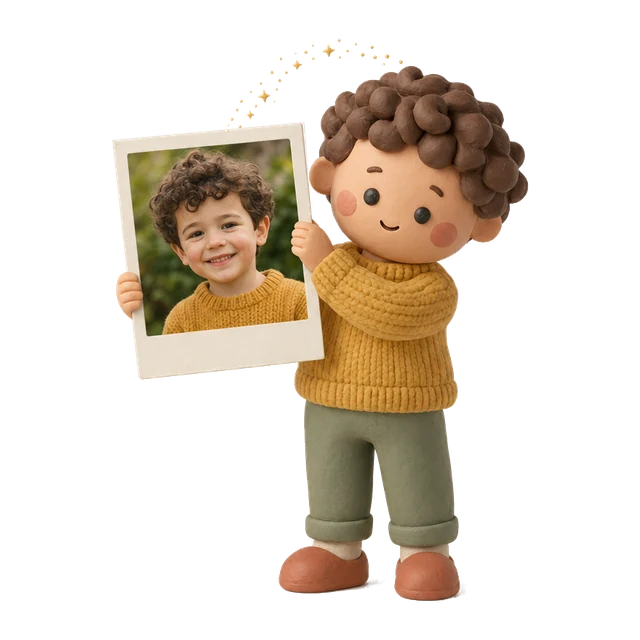
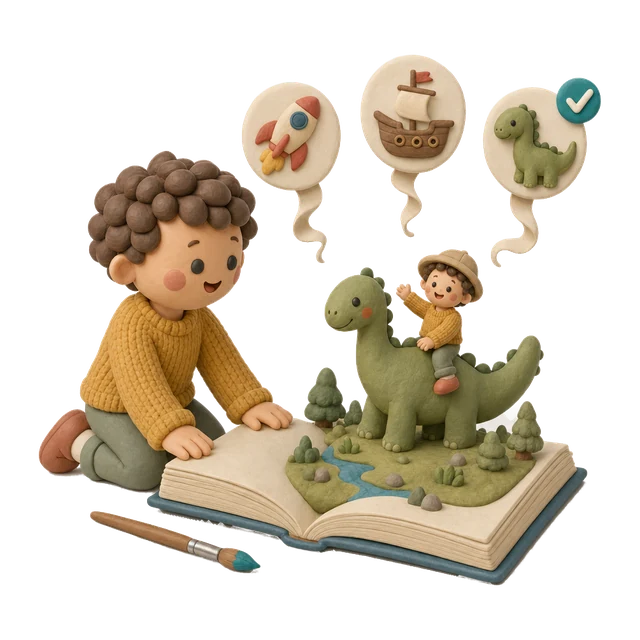
You fill in the child's name, age and what they like, and upload a photo. The story about unicorns is written for your very own child, and the thirteen pictures and the cover are drawn from the photo in the style you choose. Brothers and sisters, parents, grandparents or the pet can come along, up to five characters. If you would like to include something that has happened lately, a trip or a lost tooth, just write it and it is woven in.
From eBook to hardcover book
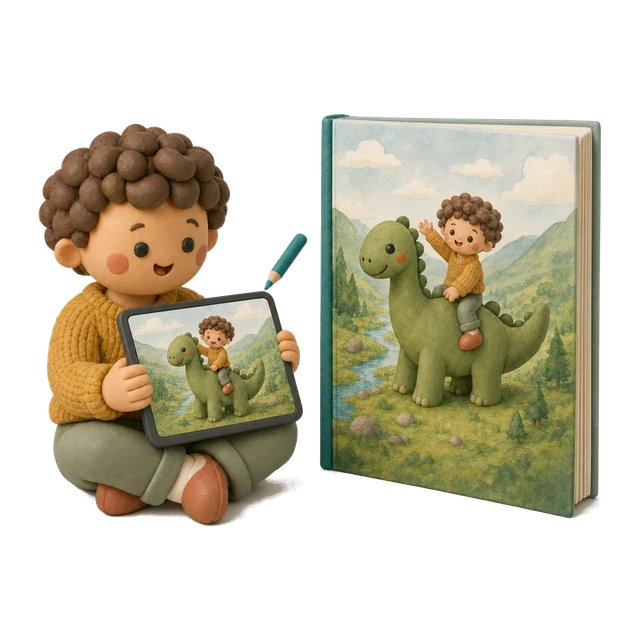
The eBook is ready a few minutes after payment. Read it, change the text and ask for new pictures until you are happy. Then order it as an A4 hardcover book, printed and sent to your door, or straight to the child as a gift. Do add the audiobook or the coloring pages. Start creating the book or read more about the prices. Would you like to see a finished book before you decide? Browse our example books.
How the story could begin
At the far end of the paddock, where the fence stops and the birch trees begin, something white is standing. At first you think it is a horse. Then it turns its head, and in the middle of its forehead gleams a horn twisted like a seashell. You hold your breath. Grandad has told you never to run up to an animal you don't know, so you sit down in the grass and wait. It takes a long time. A bumblebee drones past. The sun goes behind a cloud and comes out again. Then you hear hooves, soft and slow, and suddenly it is standing right beside you. It sniffs your hand. It smells of apples and rain. “You waited,” it says, though its mouth does not move. “Most people run. Would you like to see where we live?”
 Christmas
 Birthday
 Unicorns
 Dinosaurs
 Pirates
 Space
 Princes and princesses
 Fire department
 Sports
 Mermaids
 Superheroes
 Knights and dragons
 Construction vehicles
 Starting school
 A trip to the farm
 Jungle
 Fairies
 Treasure hunt
 Underwater
 A new baby
 Brushing teeth
 Confidence
 Bedtime story
 The enchanted forest
 Witches and spells
 Giants
 Gnomes
 Wizard school
 Camping
 Time travel
 Haunted house
 Police
 Racing
 Airplanes
 Secret mission
 The zoo
 Dressing up
 Building a tree house
 The amusement park
 A train journey
 A visit to the doctor
 The dentist
 The library
 The beach
 The forest
 Baking
 Music
 Dance
 Ancient Egypt
 The Stone Age
 The Vikings
 In the future
 The Middle Ages
 Candy land
 At the North Pole
 The savannah
 Easter
 Halloween
 Lucia
 Midsummer
 New Year
 Name day
 Eid
 Hanukkah
 Becoming a big brother or sister
 Father's Day
 Mother's Day
 Grandparents
 A new pet
 Moving house
 Sleepovers
 A wedding
 Vacation
 Learning to ride a bike
 Giving up the pacifier
 Potty training
 Tidying up
 Eating well
 Learning to tell the time
 Learning to count
 The alphabet
 Seasons and weather
 Afraid of the dark
 Tantrums
 Feeling homesick
 Being teased
 Jealousy
 Feeling proud
 Handling big feelings
 Funny story
 Olivia
 Muhammad