Why the theme Starting school makes a good book
An adventure that suits the child
Starting school is one of the first big changes a child understands they are going through. There are new grown-ups, new rules, a dinner hall, playtimes and perhaps a class where they don't know anyone. Lots of children are excited and worried at the same time, sometimes on the very same evening. A book in which your child has already got through the first day – hung up their coat on the peg, found their place, eaten lunch off a tray – makes the unknown a little more familiar. It also gives you something to talk about calmly before the big day arrives.
The first day, hour by hour
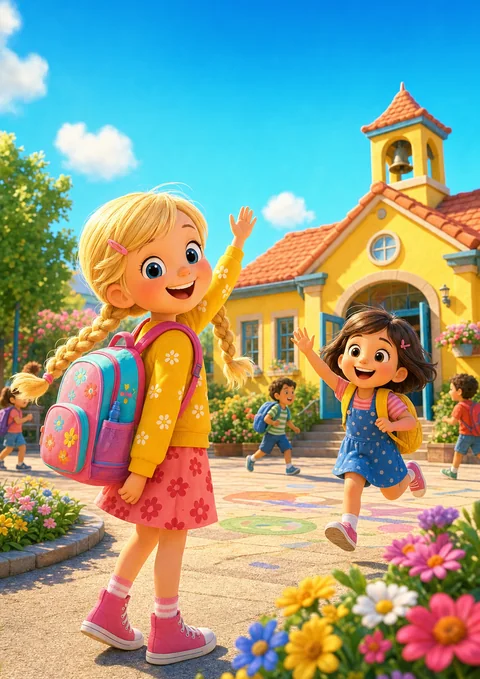
A starting-school book can follow the day in the order it usually goes. Your child hangs up their coat, finds their seat and says their name in a circle. There's a game with numbers or letters, and then playtime, when your child plucks up the courage to ask someone by the climbing frame if they want to play. Lunch in the dinner hall can be a little adventure of its own, with a tray, a knife and fork and a big pot of potatoes. The day can end at after-school club, or with someone at the gate asking how it went.
Most of what happens on a first day at school is ordinary. That's exactly why it helps to have seen it beforehand, with yourself in the starring role.
Your school, your names
The more the book resembles the real day, the more it can do. Write in the name of the school and the teacher's name, if you know it, and the way there – past the corner shop, over the bridge, along the cycle path. If a friend from nursery is starting at the same time, they can come along in the story. If your child has an older brother or sister at the same school, they make a natural guide. If something is a worry, like the big playground or the dinner hall, it can have a page of its own where it all goes well.
Something to talk about, before and after
The topic works for several ages. The same calm approach suits a two-year-old about to start nursery. Four- and five-year-olds who will soon start school get a clear, reassuring day. At 6–9 the book gets dialogue and a small challenge, like finding the way back to the classroom after playtime. Older children may be changing schools or joining a new class, and then the book can hold more thoughts and feelings.
Walk the route to school together one day before term starts and look out for things you've seen in the book. Ask your child what they think will happen first, and what they're looking forward to most. There's more about that very first day in the idea First Day at School.
Your child is the hero
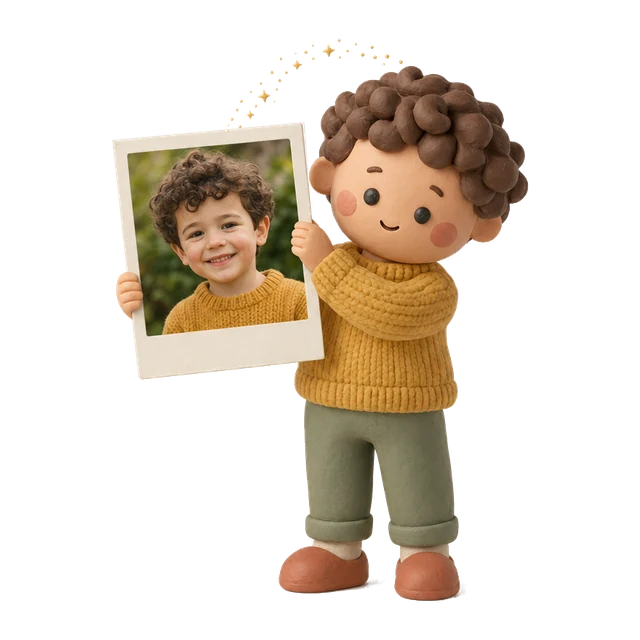
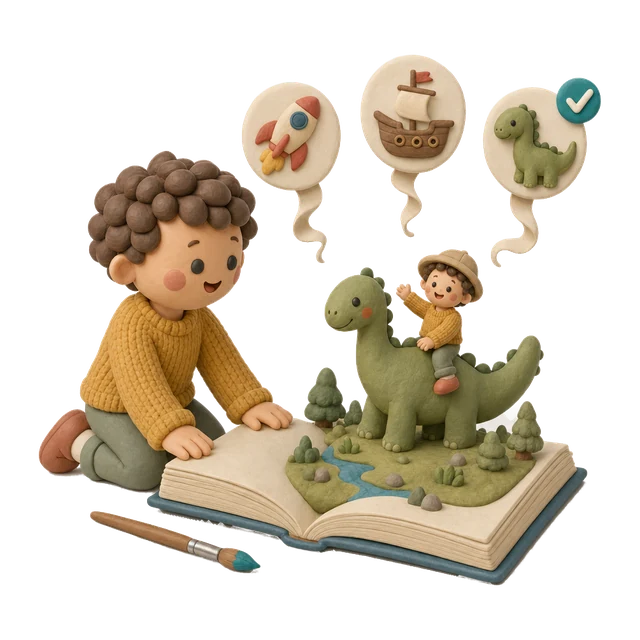
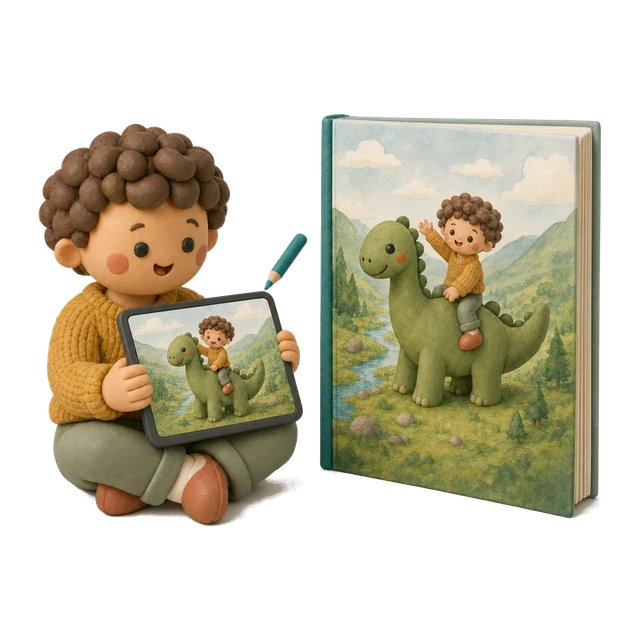
You fill in the child's name, age and what they like, and upload a photo. The story about starting school is written for your very own child, and the thirteen pictures and the cover are drawn from the photo in the style you choose. Brothers and sisters, parents, grandparents or the pet can come along, up to five characters. If you would like to include something that has happened lately, a trip or a lost tooth, just write it and it is woven in.
From eBook to hardcover book
The eBook is ready a few minutes after payment. Read it, change the text and ask for new pictures until you are happy. Then order it as an A4 hardcover book, printed and sent to your door, or straight to the child as a gift. Do add the audiobook or the coloring pages. Start creating the book or read more about the prices. Would you like to see a finished book before you decide? Browse our example books.
How the story could begin
The night before, you packed everything twice. Your pencil case, your PE bag and a banana that Mum tucked in right at the bottom. Your shoes are waiting by the door with their toes pointing the right way. In the morning the air is cool and clear, and it smells of cut grass by the fence round the playground. There are so many children. Some are big, much bigger than you. Someone is swinging high, someone is crying a little, someone is shouting a name that isn't yours. You hold Dad's hand tightly. Then a grown-up comes over with a list and a kind voice. “Are you the one who's starting in my class?” she asks, and reads your name out loud, saying it exactly right. You go in together. On the peg at the far end of the corridor there's already a label with your name on it. And on the shelf above lies a little parcel, wrapped in brown paper and tied with string.
 Christmas
 Birthday
 Unicorns
 Dinosaurs
 Pirates
 Space
 Princes and princesses
 Fire department
 Sports
 Mermaids
 Superheroes
 Knights and dragons
 Construction vehicles
 Starting school
 A trip to the farm
 Jungle
 Fairies
 Treasure hunt
 Underwater
 A new baby
 Brushing teeth
 Confidence
 Bedtime story
 The enchanted forest
 Witches and spells
 Giants
 Gnomes
 Wizard school
 Camping
 Time travel
 Haunted house
 Police
 Racing
 Airplanes
 Secret mission
 The zoo
 Dressing up
 Building a tree house
 The amusement park
 A train journey
 A visit to the doctor
 The dentist
 The library
 The beach
 The forest
 Baking
 Music
 Dance
 Ancient Egypt
 The Stone Age
 The Vikings
 In the future
 The Middle Ages
 Candy land
 At the North Pole
 The savannah
 Easter
 Halloween
 Lucia
 Midsummer
 New Year
 Name day
 Eid
 Hanukkah
 Becoming a big brother or sister
 Father's Day
 Mother's Day
 Grandparents
 A new pet
 Moving house
 Sleepovers
 A wedding
 Vacation
 Learning to ride a bike
 Giving up the pacifier
 Potty training
 Tidying up
 Eating well
 Learning to tell the time
 Learning to count
 The alphabet
 Seasons and weather
 Afraid of the dark
 Tantrums
 Feeling homesick
 Being teased
 Jealousy
 Feeling proud
 Handling big feelings
 Funny story
 Olivia
 Muhammad